
“Past dynamics and distribution of South Africa’s biodiverse systems”
Project Team Members




Dr Kenwinn Wiener Postdoc on this project (Nelson Mandela University)
NRF African Origins Platform Project:
2022 – 2024 (Phase I) & 2025 – 2027 (Phase II)
ABSTRACT: The southern margin of South Africa hosts an extraordinary array of global biodiversity hotspots and an associated archaeological record that provides some of the earliest evidence of our species’ evolution to behavioural modernity. Combined, these aspects of South African natural and cultural heritage have made the region a focal point of both national and international research initiatives in recent decades. Logically, scientific initiatives have been centred on 1) modern ecology and 2) archaeology, reflecting the most obvious aspects of regional interest. However, despite the important discoveries and advancements that have been made, vital knowledge gaps remain. Most notable is the lack of information regarding the climatic and environmental drivers that have contributed to the evolution of regional biodiversity, and how these changes and this diversity influenced the evolution of our ancestors. This project will develop knowledge of past climate and environmental change along Africa’s southern margin and enable a fusion of disciplines for a more comprehensive understanding of both biodiversity and human-environment interactions in this fascinating region. To this end, this project will encompass the globally unique biodiversity hotspots of the Cape Floristic Region and Maputaland-Pondoland-Albany Region, collecting palaeo-archives across key environmental gradients. These archives, including both sediment cores from lakes and wetlands and rock hyrax middens, will be analysed within a multi-proxy, multi-disciplinary framework, using pollen, fungal spores, micro- and macrocharcoal and geochemistry to elucidate changes in vegetation, herbivory, fire, hydrology and climate. This work is designed to actively develop regional capacity, using the new Palaeolab at Nelson Mandela University and engaging students and early career scientists from the area to contribute to this development of fundamental knowledge regarding their environment and history.
NRF Grant No: 136507

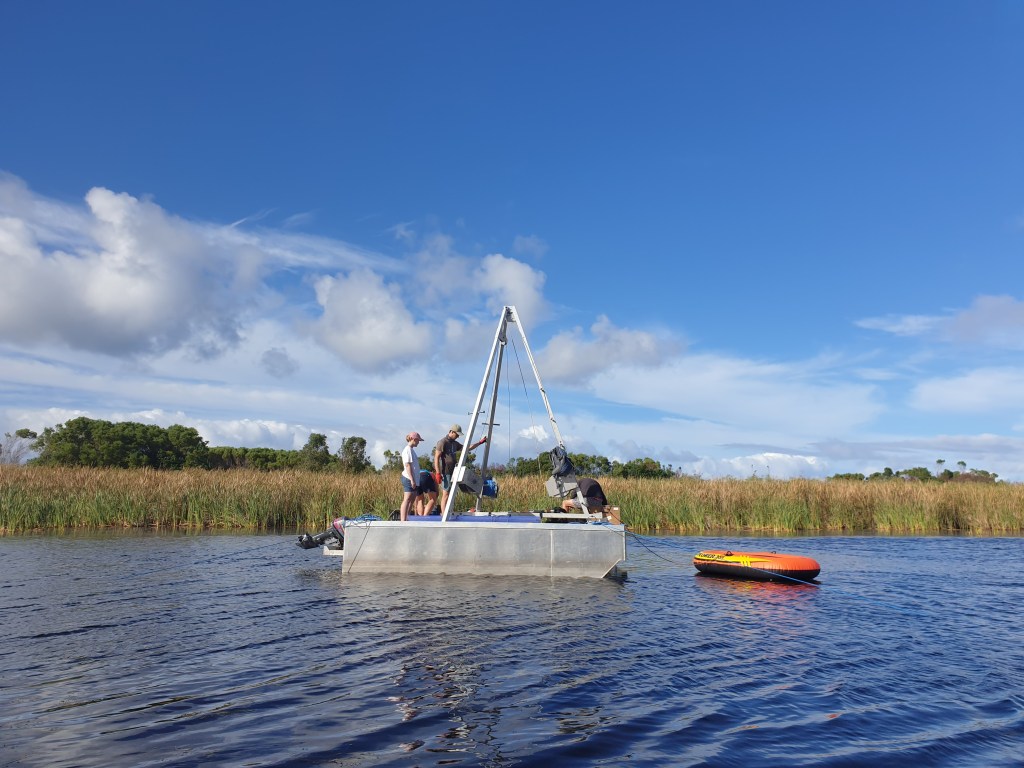
Research sites

Project Highlights
2025
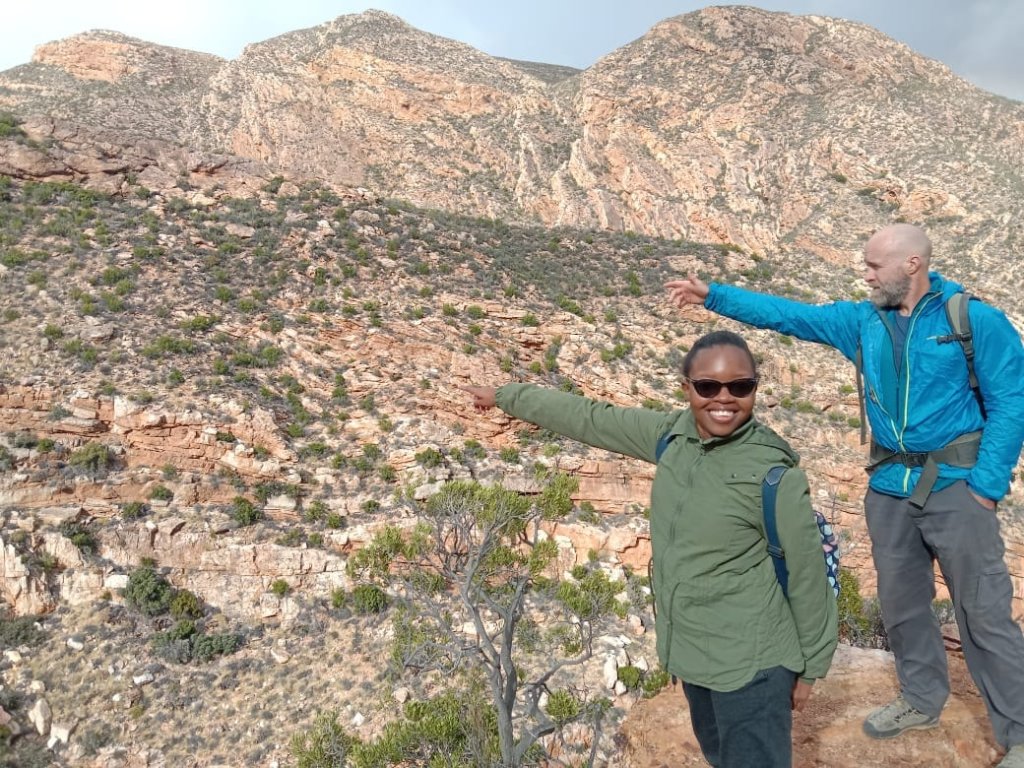
2025 was the start of Phase II of this project, it was a year of intense data generation as well as some fieldwork. See the below video for a summary of the Cederberg fieldwork we conducted in September.
Two of our students were awarded their MScs and registered for their PhDs. We are lucky to have Marishka Govender and Luke Nel conducting doctoral research directly linked to this project.
2024
2024 saw the work related to this project being showcased by the PI, Co-PI, collaborators and Masters students at the SASQUA Congress in the Cango Valley in May.
We also conducted several fieldwork trips in the Cape Fold Belt mountains.

2023
In 2023 we showcased the ongoing work for this project through various platforms, specifically successful was the Nelson Mandela University Science Faculty Palaeoscience Symposium in March and the INQUA XXI Rome in Italy in July (see list of presentations below).
Several fieldwork campaigns were successfully executed including follow-up work within the Swartberg region of the southern Cape and in the Baviaanskloof
2022
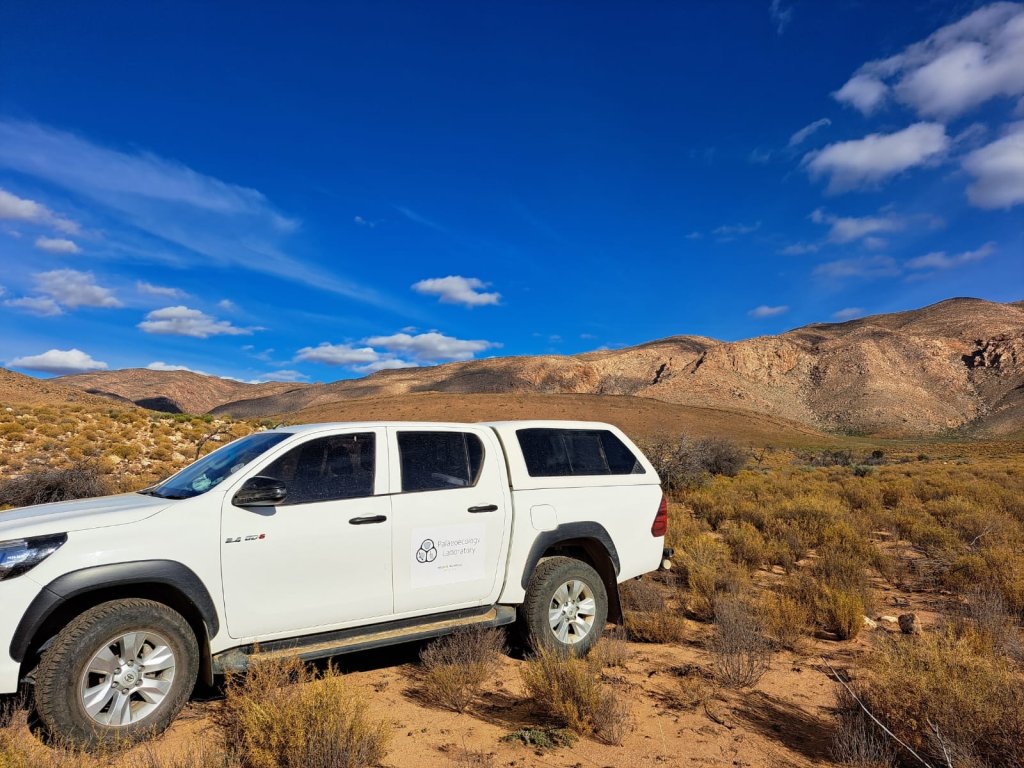
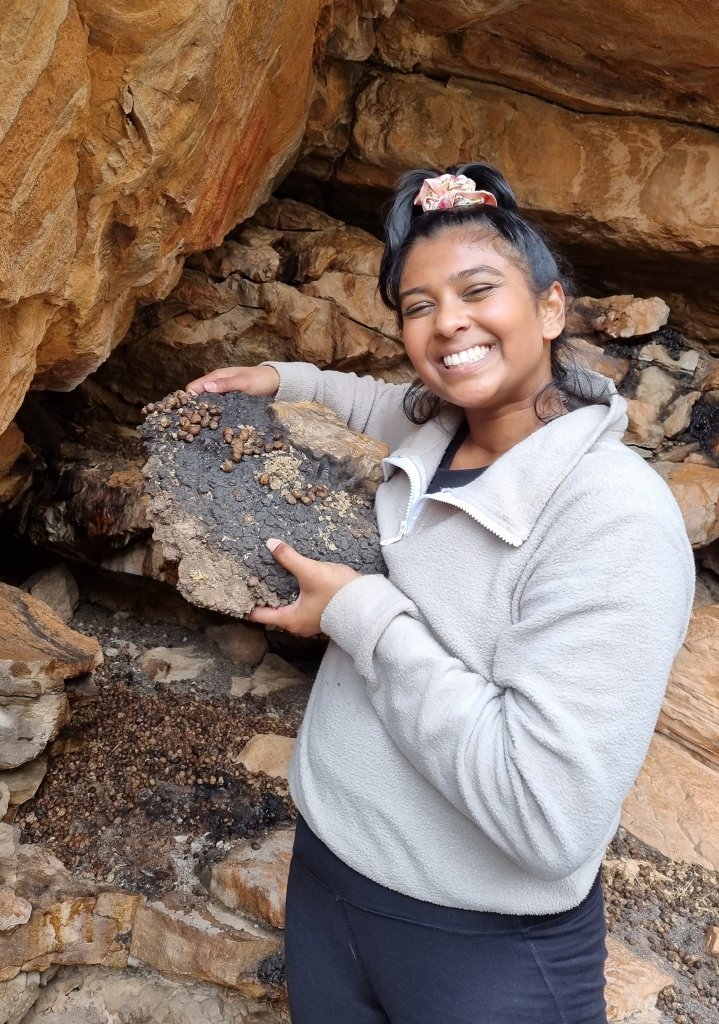
Southern Cape interior fieldwork We participated in a very successful hyrax midden recce fieldtrip to the Klein Karoo. Mandela Uni students learnt what middens look like in situ and how to spot them from a distance.



Palynological Training Workshop: To meet one of the overarching goals of the project – to build capacity and enhance the transfer of specialised skills – a comprehensive training workshop for the Palaeolab’s postgraduate student group led by Dr Saúl Manzano at his institution the University of León, in Spain took place from 11 – 15 July 2022.
The workshop integrated both lecture and practical components with several palaeoecology-themed guest seminars, together with intensive palynology training sessions centred on the identification of Cape pollen types.
The workshop not only massively accelerated the uptake of fundamental palynological training (not available in South Africa) but also represented an excellent opportunity for Mandela Uni students to participate in an international scientific initiative and to develop and strengthen their research careers.


Student projects
A. Ntsondwa, S. Manzano, M.S. Humphries, G.A. Grobler and L.J. Quick: Reconstructing the fire history and palaeoenvironment at Thyspunt, southern Cape coast, South Africa. Nelson Mandela University. MSc awarded 2024.
E. Hilmer, A.C.M. Julier, B.A. Grobler, N. du Plessis and L.J. Quick: Establishing connections between contemporary vegetation distributions, modern pollen representation and the fossil pollen record in the Cape Floristic Region. Nelson Mandela University, ongoing MSc project (2023 – 2025).
M. Govender, S. Manzano, B.M. Chase and L.J. Quick: Using an 8000-year-old fungal spore record from Whale Rock wetland to assess changes in herbivory along the southern Cape coast of South Africa during the Holocene. Nelson Mandela University, Botany Honours Project 1 2022.
M. Govender, S. Manzano, B.M. Chase, N. du Plessis, M.S. Humphries and L.J. Quick: Exploring vegetation change along the southern Cape coast: pollen evidence from Whale Rock, Plettenberg Bay. Botany Honours Project 2 2022.
MSc candidate (2023 – 2024) (L.J. Quick primary supervisor, co-supervisor: I Esteban, University of Barcelona)
Reconstructing past environments: a new phytolith record covering the Holocene from the Baviaanskloof, southern Cape interior, South Africa
G.A. Langa, S. Manzano, B.M. Chase and L.J. Quick: Assessing herbivory impacts in the Baviaanskloof during the Holocene using coprophilous fungal spores from hyrax middens. Nelson Mandela University, Botany Honours Project 2022.
G. A. Langa, S. Manzano, B.M. Chase, N. du Plessis and L.J. Quick: Exploring vegetation change and fire dynamics in the Eastern Cape interior: charcoal evidence from the Baviaanskloof. Nelson Mandela University, Botany Honours Project 2 2022.
L.S. Nel, L.J. Quick and S. Manzano: A study of the palynological differences between two dominant Asteraceae species within the southern Cape: Osteospermum moniliferum and Metalasia muricata. Nelson Mandela University, Botany Honours Project 1 2022.
L.S. Nel, L.J. Quick, N. du Plessis and S. Manzano: Extracting more ecologically-significant information from the southern Cape fossil pollen record: A re-assessment of the Asteraceae pollen types. Nelson Mandela University, Botany Honours Project 2 2022.
MSc candidate (2023 – 2024) (L.J. Quick primary supervisor, co-supervisor: Dr Saul Manzano, University of Leon)
Extracting more ecologically-significant information from the southern Cape fossil pollen records: A reassessment of the Asteraceae pollen types.
V, Dyubele (co-supervisor, primary supervisor: Ass. Prof Marc Humphries, University of Witwatersrand)
Geochemical Investigation into Holocene Palaeoenvironmental Change along the Southern Cape Coast, South Africa. MSc (2021 – 2022). Awarded 2023.
R. Mey (co-supervisor, primary supervisor: Marc Humphries, University of Witwatersrand)
Honours project: A 30,000 year paleoclimate reconstruction from the southern Cape coast, South Africa using
geochemical proxies (2021).
Masters project: Reconstructing Late Quaternary environmental change on the southern Cape coast of South Africa: A 30,000-year geochemical record from Pearly Beach (2022 – 2023). Awarded November 2023.
Presentations
L.J. Quick, S. Manzano, M.S. Humphries, B.A. Grobler, M. Chevalier, M.E. Meadows, P.T. Gama and B.M. Chase: Palaeoenvironments of the Cape Floristic Region: New research & current developments. INQUA XXI Rome, Italy, July 2023.
E. Hilmer, A. Julier, B.A. Grobler, N. du Plessis and L.J. Quick. Establishing connections between contemporary vegetation distributions, modern pollen representation and the fossil pollen record in the Cape Floristic Region. INQUA XXI Rome, Italy, July 2023.
S. Manzano, M.T. Hoffman, L. Gillson, B.M. Chase and L.J. Quick. Holocene palaeoecological reconstructions of landscape dynamics at the year-round/winter rainfall boundary in the Cape Floristic Region (Southwestern South Africa). INQUA XXI Rome, Italy, July 2023.
A. Ntsondwa, M.S. Humphries, S. Manzano and L.J. Quick. Reconstructing the fire history and palaeoenvironment at Thyspunt, southern Cape coast, South Africa. INQUA XXI Rome, Italy, July 2023.
S. Davids and L.J Quick. Validating the dung fungi spectra of herbivores: A Coprophilous Fungal Spore calibration study from the Eastern Cape, South Africa. Southern African Society for Quaternary Research (SASQUA) 24th Biennial Congress, Cango Valley, South Africa, 19-24 May 2024
R. Mey, M. S. Humphries and L.J. Quick. Unravelling late Quaternary climate variability along the southern Cape coast: Insights from a 30,000-year geochemical record at Pearly Beach. Southern African Society for Quaternary Research (SASQUA) 24th Biennial Congress, Cango Valley, South Africa, 19-24 May 2024
S. Manzano, L.J. Quick, B.M. Chase, M.T. Hoffman, L. Gillson. Patterns and processes of vegetation change in highly biodiverse arid and Mediterranean ecosystems of the Cape Floristic Region (South Africa). Southern African Society for Quaternary Research (SASQUA) 24th Biennial Congress, Cango Valley, South Africa, 19-24 May 2024
S.G. Mosher, M.J. Power, L.J. Quick, T. Haberzettl, T. Kasper, K.L. Kirsten, D.R. Braun, J.T. Faith. Fire-climate-pastoralist links in the Cape Floristic Region: High-resolution sedimentary charcoal records from Verlorenvlei and Eilandvlei, South Africa. Southern African Society for Quaternary Research (SASQUA) 24th Biennial Congress, Cango Valley, South Africa, 19-24 May 2024
A. Ntsondwa, S. Manzano, M.S Humphries and L.J Quick. Reconstructing the fire history and palaeoenvironment at Thyspunt, southern Cape coast, Eastern Cape. Southern African Society for Quaternary Research (SASQUA) 24th Biennial Congress, Cango Valley, South Africa, 19-24 May 2024
M. Govender, I. Esteban, B.A. Grobler and L.J. Quick. Reconstructing past environments: a new phytolith record covering the Holocene from the Baviaanskloof, southern Cape interior, South Africa. Southern African Society for Quaternary Research (SASQUA) 24th Biennial Congress, Cango Valley, South Africa, 19-24 May 2024
E. Hilmer, A.C.M. Julier, B.A. Grobler and L.J. Quick. Establishing connections between contemporary vegetation distributions and modern pollen representation in the Nelson Mandela University Reserve. Southern African Society for Quaternary Research (SASQUA) 24th Biennial Congress, Cango Valley, South Africa, 19-24 May 2024
Publications
Quick, L.J., Chase, B.M., Carr, A.S., Chevalier, M., Grobler, B.A. and Meadows, M.E. (2022). A 25,000 year record of climate and vegetation change from the southwestern Cape coast, South Africa. Quaternary Research: 1-18
Manzano, S, Quick, L.J, Chase, B.M., Hoffman, M.T and Gillson, L. (2023). Long-term vegetation response to rainfall seasonality and fire in the heathlands and shrublands of the Cape Floristic Region (SW South Africa). Journal of global planetary changes 220: 104014
Quick, L.J., Chase, B.M., Chevalier, M., Grobler, B.A., Manzano., S (2024). Fire drives major Holocene vegetation shifts between subtropical and Mediterranean-type ecosystems: a case study from a biodiversity hotspot in South Africa. Ecography
Humphries, M.S., Mey, R., Reimer, P.J. and Quick, L.J. (2025). Intensification of the Southern Hemisphere westerly winds during the last deglaciation (18.5 – 14.0 kcal yr BP): Evidence from Pearly Beach on the southern Cape coast of South Africa. Journal of Quaternary Science.

 Lynne J. Quick